



A living wage, by definition, covers the real cost of a decent standard of living: food, housing, healthcare, transport, education, and a small margin for unexpected expenses.
A minimum wage, by contrast, is a legal threshold set by governments which can fall far below what workers actually need to live.
For millions of garment workers worldwide, the gap between a living wage and minimum wage is profound.
In key hubs like Cambodia, minimum wages cover just one-third of an estimated living wage.
This disparity has been documented for more than a decade, yet virtually no major fashion brand discloses how many of their workers actually earn a living wage.
The consequences are stark: workers face impossible choices between food, healthcare, housing, and education, while brands risk the kind of court interventions and public scandals now hitting Italian luxury labels over supply chain labour abuses.
Tools for Progress
The tools to calculate and deliver living wages already exist; the challenge for brands is choosing them, using them, and integrating them into sourcing decisions.
Asia Floor Wage
The Asia Floor Wage defines a living wage sufficient for a worker supporting themselves and two family members. The figure is expressed in purchasing-power-parity terms (PPP), which adjusts for local cost-of-living differences. For 2024, this benchmark equals the purchasing power of about €1,500 per month.
Brands can use this as a regional reference point when assessing wage gaps in Asian supply chains.
Anker Methodology
Brands can lean on Anker benchmarks to set fair pay targets, inform Codes of Conduct, and track year-on-year progress.
Multi-stakeholder initiatives (MSIs)
Programs like Action, Collaboration, Transformation (ACT), and Fair Wear Foundation bring brands, unions, and suppliers together to negotiate fair wages and improve purchasing practices.
For brands, MSIs offer shared responsibility, credibility, and collective leverage where individual action is not enough.

It’s Not Just a Global South Problem
There’s a persistent myth that wage exploitation happens only in Asia or other Global South countries. In reality, garment workers in Eastern Europe and other “nearshore” production countries (those close to Western European markets) often face similarly low pay.
In some cases, the gap between actual wages and a living wage is even larger than in major Asian hubs. Legal minimum wages in countries like Bulgaria, Romania, and Serbia frequently fall below the poverty line, yet “Made in Europe” labels continue to signal fairness and quality
The truth is that low wages are a global system problem, not a regional one. Brands’ relentless push for lower costs and faster turnarounds puts pressure on factories everywhere, creating a “race to the bottom” where workers’ pay is the first to suffer.
To counter this, initiatives like the Europe Floor Wage are working to establish cross-border living wage benchmarks across Central, Eastern, and Southeast Europe. Their goal: to ensure factories can’t simply relocate to chase lower wages, but instead commit to paying workers fairly wherever they operate.
Brand Commitments vs. Reality
Despite a decade of pledges, real-world progress remains slow.
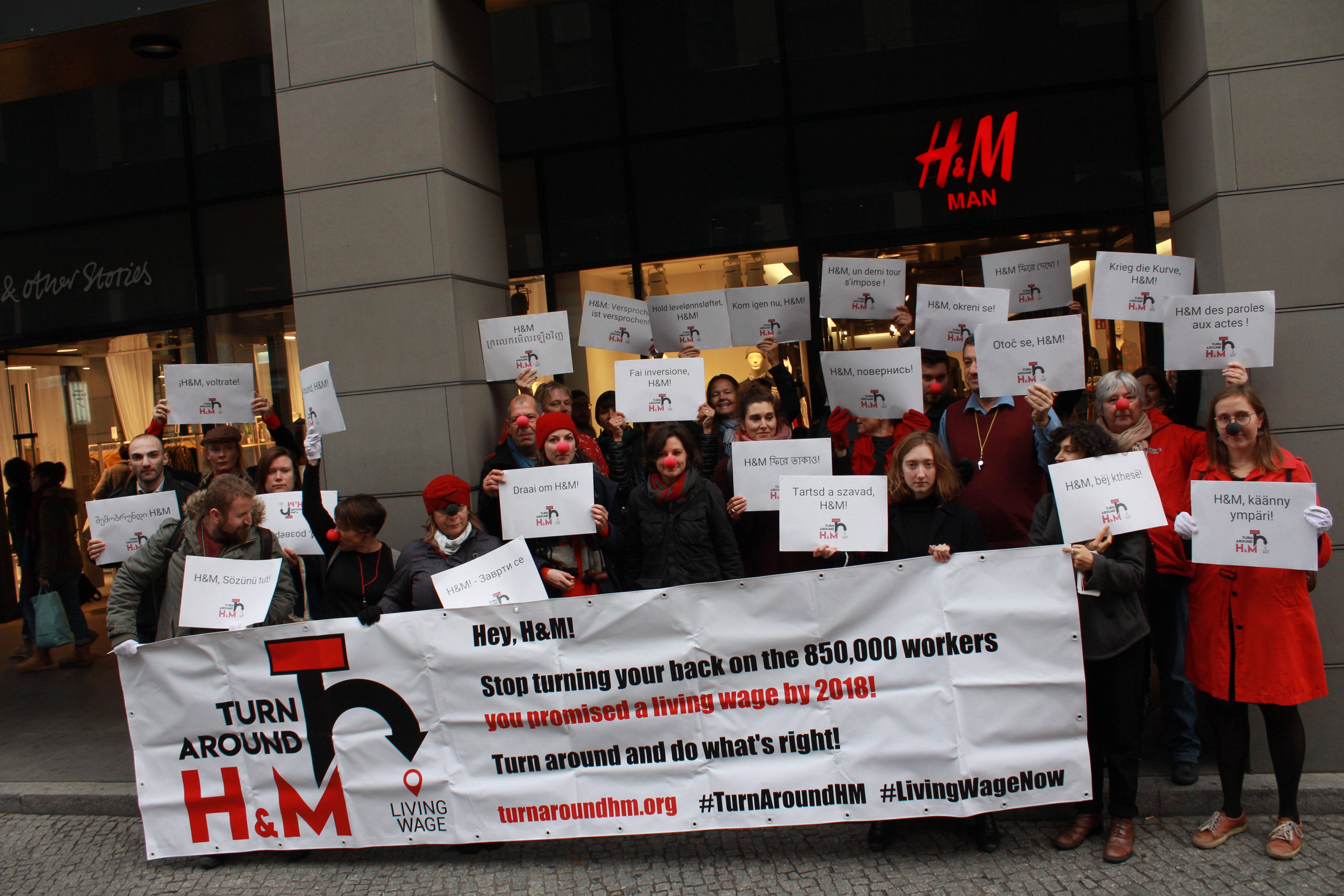
Take H&M, which in 2013 pledged to secure living wages for 850,000 workers by 2018, a goal it later abandoned as the company shifted its focus to process-driven measures instead, such as improving wage-management systems in factories or implementing supervisory training. While these steps can help long-term, they do not guarantee workers receive higher pay.
Or look at India in 2025, when sudden U.S. tariffs left thousands of factory workers furloughed overnight. Migrant workers, who form the backbone of production, were left without pay or safety nets.
These examples highlight a persistent accountability gap. Outsourcing production allows brands to declare support for fair wages while avoiding the long-term investments needed to make real change. Without commitments to fair pricing, order stability, and local engagement, meaningful wage reform stalls.
Living Wages Enter the Regulatory Spotlight
The EU’s new sustainability reporting rules are putting living wages on the agenda. Under the CSRD and ESRS, some brands must now disclose how they ensure “adequate wages” across their operations and supply chains.
But the current draft of ESRS still applies different standards: within the EU, companies can be expected to align with living wage principles, while outside the EU, legal minimum wages can still count as “adequate.” Since only 29 of 178 countries set minimum wages above living wage levels, this risks creating a two-tier system that undermines credibility and fairness.
As consultations continue, stakeholders are calling for stronger, globally consistent benchmarks to ensure that “adequate” truly means a wage that workers can live on, wherever they are.
A Systemic Problem
Low wages are a consequence of a fashion system that is fundamentally flawed.
Consumers have been conditioned to expect ever-lower prices. Shareholders expect ever-higher returns. To make both possible, the pressure is pushed down the chain, and the people with the least power, garment workers, absorb the cost.
Paying a living wage means someone has to absorb the difference. Either prices rise, or brand margins fall. One risks losing customers; the other risks shareholder dissatisfaction. Neither path is easy, which is why the system continues to default to the status quo.
But brands do have agency. And as regulation tightens and expectations shift, there is a growing opportunity, and responsibility, to reshape how value is distributed.
Here are some of the practical steps brands can take to make living wages achievable in today’s fashion system:
Six Things Brands Can Do
Integrate Living Wages into Codes of Conduct: Include living wage requirements, map supplier pay levels, and set measurable improvement goals
Reform Purchasing Practices: Price garments fairly, commit to long-term supplier relationships, and avoid last-minute order changes that drive down wages
Support Freedom of Association: Empower workers to organise and bargain collectively
Join Collaborative Initiatives: Align with groups like ACT, Fair Wear Foundation, and the Ethical Trading Initiative to share learning and scale impact
Be Transparent: Publish wage strategy, progress, and methodologies, not just data, to build accountability and trust
Improve Wage Financing: Pilot living wage premiums or brand-funded wage funds that directly reach workers

How Bergstrand Can Help
Real progress begins when brands take accountability.
At Bergstrand, we support brands in mapping their supply chains, identifying wage gaps, and creating strategies for improvement.
From strengthening Codes of Conduct and benchmarking collaborative initiatives to reforming purchasing practices and building long-term sourcing roadmaps, we guide brands through the practical steps that make fair pay achievable.
A strong starting point for many brands is a Code of Conduct. Embedding clear living-wage expectations, along with guidance on implementation, monitoring, and supplier engagement, creates a strong foundation for change. If your brand needs support updating or developing its Code of Conduct, you can explore our service offering here:
We also support brands with sustainability reporting, helping ensure that living wage progress is credible, measurable, and aligned with emerging regulations.
If you found this newsletter valuable, please consider forwarding it to colleagues or contacts who may benefit.
General Enquiries: info (at) bergstrand.co